
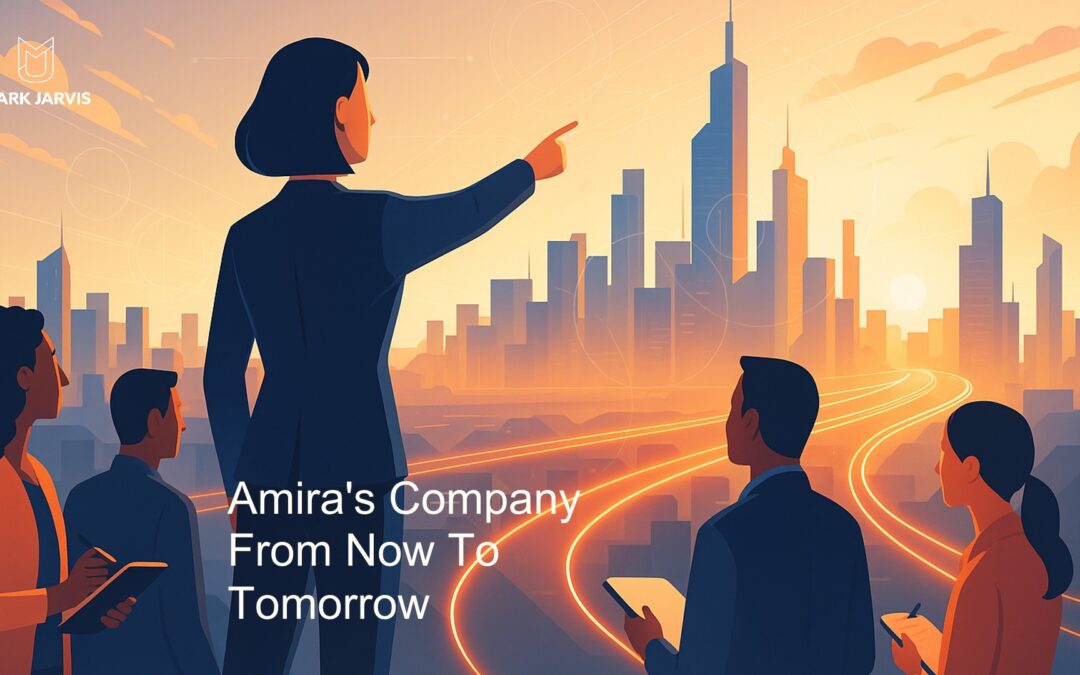
It was a Tuesday afternoon when Amira gathered her senior team in the warehouse. The rain drummed against the corrugated roof, and the hum of forklifts moving pallets underscored the conversation. Their latest numbers had just landed: orders looked steady, the marketing dashboard glowed with activity, and customer churn was within the expected range. All looked fine, yet Amira had a knot in her stomach she couldn’t shake.
She turned to her team and said quietly, “We’re marketing what people are buying today. But tomorrow they’ll need something different, and we’re not talking about it.”
The wake-up call
Every company faces a crossroads at some point: continue feeding today’s demand, or shift attention to shaping tomorrow’s. Most stay rooted in the immediate with the same campaigns, leads, and sales pressures, because for most, those are tangible and urgent. But Amira saw a wider horizon. The real opportunity wasn’t in louder messaging about what customers already knew they wanted. It was in positioning her company as the one who always seemed ready for what was coming next. That drove different conversations: marketing could be more than communication; it could be foresight.
Why today wasn’t enough
By the time customers articulate their needs, needs that have been forming for months, their needs have already shifted; pressures building quietly in their own supply chains, or demands surfacing from their clients.
Amira was seeing this everywhere. Procurement teams had begun probing for traceability and sustainability credentials. Regulators were preparing new compliance standards. Her largest customer was piloting service contracts instead of product purchases. These weren’t just side conversations; they were signals of what was about to matter most.
It became clear that if her company continued marketing only what was asked for today, it would always arrive late to the conversation. To stay relevant and valuable, they needed to start speaking into tomorrow’s challenges before they fully arrived.
What changed when we looked ahead
Once Amira reframed the role of marketing, small shifts began to ripple through the company. The pipeline looked cleaner and instead of chasing every brief that came in, the team could prioritise opportunities that aligned with the next wave of customer needs. Conversations with clients felt different too, less about specifications, more about outcomes.
Inside the business, the leadership team felt the benefit almost immediately because decisions stopped being driven by short-term noise. They began shaping campaigns and investments with greater intent, each tied to a clearer picture of the future they wanted to lead. Even product development found new focus. Engineers who once juggled endless variations, now had a sharper brief: build for where customers will be, not just where they are.
How the company found its new story
Weeks later, the change was already making a difference. Customers began involving Amira’s company earlier in their planning processes, asking them to weigh in on compliance readiness and product strategy. Competitors were still shouting about specs and pricing, but Amira’s team were guiding conversations about next year’s outcomes.
The biggest shift though, was cultural. The company carried itself differently, no longer reacting, it was now leading. Marketing was no longer an afterthought but the thread that connected today’s work with tomorrow’s opportunities.
The initial wake-up call had reshaped the company, but Amira knew the deeper challenge lay closer to home. For the change to hold, she herself would need to grow by learning to see differently, to think further ahead, and to carry her team with her.
Next we’ll discover how Amira learned to lead from the future, and why her own shift in perspective became the key to unlocking the company’s next chapter.
Amira’s leadership shift
By now, the company had begun to adjust its focus. Marketing was no longer just about responding to what clients asked for; it was starting to explore what they would need next year. But as Amira reflected on those first steps, she saw something important.
The real shift couldn’t only be organisational. For this change to take hold, she would need to lead differently herself. The way she thought, the questions she asked, the space she gave herself, all of it had to evolve if the company was to market back from the future. I’ll resist the temptation for a movie analogy here
The moment of realisation
It was during a meeting with one of her longest-standing clients. Amira found herself explaining the company’s roadmap in terms of its proven strengths, the things they already did well. The client listened politely, then leaned forward with a simple question:
“Amira, what do you think we should be preparing for next year?”
She realised she had plenty of views on what mattered today, but her thinking hadn’t stretched far enough into tomorrow. Driving back from the meeting, she replayed the conversation. It wasn’t that she lacked insight, it was that she hadn’t built the discipline to frame her leadership through the lens of future opportunity. That was the moment she understood: if she couldn’t speak clearly about what was coming, her team never would.
Why it starts with me
Amira was a strong operator. Years of building the company had sharpened her instincts for performance, customer service, and efficiency. But she knew those strengths came with a shadow: they kept her immersed in today’s operations.
Future marketing required something different. It required her to act not just as the operator of the present, but as the architect of tomorrow. That meant learning to create space for horizon thinking, deliberately stepping out of today’s flow to ask what might be forming just ahead.
She began with small habits. Every Friday she blocked an hour in her diary, simply titled “Next Year’s Needs.” No email, no meetings, just space to scan signals, explore ideas, and reflect on how the world her clients served was shifting. At first it felt unnatural, even unproductive. But she began to see patterns she would have otherwise missed.
What I gained from letting go of ‘only today’
The effect was subtle but powerful. In leadership meetings, Amira noticed she was asking different questions. Instead of only “How are we performing?” she began to ask “What new pressures are our clients starting to feel?” Instead of “What’s the next sale?” she asked “What might shift the shape of demand a year from now?”
As her perspective widened, she was no less attentive to daily operations, but she wasn’t limited by them. She had added a second lens, one that looked at signals, shifts, and opportunities not yet visible in the numbers.
This change gave her team more confidence too. They saw her anchoring discussions not only in today’s metrics but in tomorrow’s context. It lifted their conversations beyond immediate delivery and into the space of possibility.
How I now show up as a leader
Amira hadn’t become a different person; she had expanded her role. She was still the leader who cared about execution, but she was also becoming the one who gave voice to what was coming.
Clients began to notice too. When they asked what the future might hold, Amira no longer hesitated. She could speak with clarity about the shifts she was tracking, the pressures forming downstream, and the steps her company was already taking to prepare.
Inside the business, the tone changed too. By showing she was willing to step beyond the comfort of today, she gave her team permission to do the same. Future marketing was no longer just a concept, it was a lived behaviour, modelled at the top.
Looking ahead
Amira had taken her first step into leading back from the future. She had learned that the company’s transformation depended on her own ability to think differently, to balance today’s operations with tomorrow’s opportunities.
But she also knew she couldn’t carry this alone. For the change to stick, her team would need to experience the same shift: moving beyond the comfort of current demand and learning to see themselves as creators of tomorrow’s conversations.
Next we’ll discover how a group well versed in marketing for today’s delivery began to discover pride and energy in becoming the company’s guide to tomorrow’s opportunities.
From today’s delivery to tomorrow’s opportunities
The shift in Amira’s own thinking had been important, but she knew the company’s future marketing could never rest on her alone. For the change to stick, her team had to feel it, own it, and practise it together.
They were already skilled at marketing for today. They knew how to craft campaigns, nurture leads, and position products against current demand. But Amira wanted something more: a team that could recognise signals early, play with possibilities, and spot the opportunities hiding just beyond the horizon. The question now was: how to get there?
When good ideas aren’t enough
Their first workshop was polite, competent… and flat. Everyone brought sensible suggestions. New campaign angles, better lead filters, polished, practical, and workable ideas. But as the session wound down, Amira could see it: nothing here stretched beyond today’s demand. They were producing good ideas, but not future ones.
She remembered a principle she’d seen work before: sometimes the way forward is to invite the bad ideas.
Inviting the ridiculous
At their next meeting, she set a different challenge.
“For the next 15 minutes,” she said, “I want the worst marketing ideas you can think of. The most impractical, outrageous, laughable concepts you can dream up.”
At first, the room went quiet. Then the suggestions started to flow.
“Let’s buy a noticeboard in the desert where nobody will ever see it.”
“Let’s market a product that doesn’t even exist yet.”
“Let’s launch a campaign only our clients’ clients would understand.”
Laughter broke the tension, then someone asked, “But what if that did work?”
What if it works?
A seemingly off-hand question, but it began to open the team’s mind to what if’s.
The “noticeboard in the desert” sparked a conversation about hyper-targeted placement; the idea that reaching a smaller but perfectly relevant audience might be more powerful than shouting in crowded spaces.
The “non-existent product” turned into a discussion about marketing concepts a year before they launched; testing appetite, building anticipation, and positioning the company as ahead of the curve. And the “campaign for clients’ clients” became a breakthrough point. They realised they had rarely spoken directly to the pressures of their clients’ customers. What if future marketing put those downstream needs at the centre of the story?
None of these ideas would have surfaced if they’d stuck to sensible, safe thinking.
For more about brainstorming stupid ideas, have a look here:
https://mark-jarvis.co.uk/the-power-of-brainstorming-stupid-ideas/
Discovering a new rhythm
The team began to build a rhythm around this approach. Each month, they ran a short “worst ideas” session. They captured absurd suggestions quickly, then dissected them for hidden potential.
It did more than generate fresh angles. It shifted the team’s culture. People felt safer to contribute, even when their ideas weren’t polished. Collaboration deepened, sales, operations, and service voices were drawn into the conversation because absurdity lowered the barriers of expertise. Marketing was no longer a department producing campaigns. It was becoming the company’s opportunity lab, the place where ideas for tomorrow’s value were tested, stretched, and made real.
A team that found its new role
Over time, their campaigns started referencing needs that hadn’t yet reached the mainstream and as clients noticed, they began to say, “You always seem to be talking about the things we’re only just beginning to think about.”
The team felt a new kind of pride. They weren’t just executing today’s delivery, they were guiding tomorrow’s opportunities. And it all began with a willingness to laugh at themselves, to ask “what if it works?”, and to collaborate in a different way.
Looking ahead
Amira’s company now had a team capable of marketing from the future back. But the real test would be external: how would clients respond to a partner who anticipated their needs before they voiced them? That was the next chapter in the journey — shifting the relationship with clients from responsive supplier to trusted guide.
Anticipating a client’s needs before they’re voiced
Amira’s company had built its reputation on reliability. Deliver on time, meet the brief, respond quickly, and clients kept coming back. It was solid, dependable, and respected. But it was also replaceable.
As her team began to think further ahead, steeped in the discipline of future marketing, they started showing up to client conversations differently. Instead of only answering questions, they began asking deeper, sharper, more forward-looking questions that reached into the client’s world, and even into the world of their clients’ clients. This wasn’t about being clever. It was about being useful in a way that no competitor had been.
Hearing the unasked questions
On a call with a long-term customer, Amira’s account manager didn’t open with product updates or lead times. Instead, she asked: “How are your own customers’ expectations shifting this quarter? What’s putting pressure on you that wasn’t on the table last year?” The client paused, surprised. Normally suppliers talked specifications and price. Few asked about the pressures coming downstream. The conversation unfolded into sustainability compliance, new digital service models, and changing procurement criteria.
These weren’t topics on the original agenda, but they revealed where demand was heading. And because Amira’s team had already been exploring these signals internally, they could engage with confidence.
Why foresight builds trust
Competitors were still pitching on the surface with features, costs, and incremental improvements. Amira’s company now sat at a different level of conversation. They weren’t selling harder; they were listening deeper.
By connecting what they knew about the client’s sector with what they had mapped about downstream markets, they were able to say:
- “We’re seeing similar compliance trends elsewhere, here’s how we’re preparing.”
- “Your customers may soon demand X; have you thought about how you’ll respond?”
- “What would it mean if you could guarantee Y outcome next year?”
Each question positioned them not as a vendor, but as a partner, someone who saw the landscape, not just the transaction.
Shaping the conversation earlier
Future marketing began to change the rhythm of the relationship. Instead of being brought in after decisions were made, Amira’s company started being invited into earlier strategy sessions. Clients wanted them at the table when they were still exploring possibilities, not just when they were sourcing solutions.
This was the real payoff of future marketing: by demonstrating foresight, they earned access to the moments that shaped budgets, specifications, and partnerships. They were no longer competing on price in the procurement stage; they were shaping the brief before it even existed.
Becoming the partner they can lean on
This effect went beyond individual deals. Clients began to see Amira’s company as a source of intelligence about their own markets. They started calling not only for quotes, but for perspective: “What are you seeing in other sectors? What do you think we should be preparing for?”
That created a deeper loyalty. Price still mattered, but it wasn’t the whole story. Clients felt safer, better prepared, and more competitive because of the relationship. And in return, Amira’s company gained longer contracts, stronger margins, and a seat at the table in shaping what came next.
Looking ahead
It was now clear that Amira’s company marketing had moved far beyond campaigns and collateral, it was now the thread that connected Amira’s company to the future needs of its clients, and to the markets those clients served.
But the ripple didn’t stop there. The next challenge was subtler, yet even more powerful: helping her clients’ own customers feel the benefit of this foresight. Because when downstream value chains are strengthened, everyone wins.
The ripple effect through clients’ clients
One of Amira’s proudest moments came not from a direct customer win, but from a story she heard second-hand.
A client had gone into a high-stakes pitch with one of their own major accounts. They needed to show they were prepared for tightening regulations, shifting consumer expectations, and rising pressure on sustainability. In the room, they laid out a plan that was sharper, clearer, and more confident than their competitors’.
Later, over coffee, the client admitted:
“Most of what gave us that edge came from conversations with your team.” That was when Amira saw the true reach of future marketing. It wasn’t just strengthening her company’s brand. It was helping her clients look like heroes in front of their own customers.
Looking two steps downstream
Future marketing meant thinking not just about what Amira’s clients needed today, but about the pressures facing the people they served. Her team began to map the value chain: what new expectations were retailers placing on manufacturers, what shifts were end-consumers demanding, and what risks were regulators introducing that would cascade back upstream?
By connecting these dots, they could speak to their clients in a new way:
- “Your customer will soon need this level of traceability, here’s how we can help you prepare.”
- “We’ve seen demand from end-users in other sectors for X; this could soon be your differentiator too.”
The clients didn’t just hear solutions. They heard foresight that made them stronger in their own markets.
The hidden drivers of demand
Amira noticed something else important: demand rarely originates with the buyer in front of you, it starts further down the chain. End-users set expectations, regulators shift the rules, technologies change what’s possible, and only then do those pressures rise to the client’s level. By tuning into these hidden drivers, her company wasn’t just reacting. They were helping clients prepare for forces that hadn’t fully landed yet. This gave clients confidence to act early, and to position themselves as leaders rather than followers.
Building solutions that travel further
One absurd idea from an earlier team session had sparked a breakthrough: “What if we marketed to our clients’ clients?”
At the time, it had sounded laughable. But when they flipped it into practice, it became a powerful strategy. Instead of producing generic content, they began creating insights and stories designed for downstream audiences; regulators, end-users, and industry influencers. They weren’t marketing their company directly, they were equipping their clients with material they could use in their own conversations. White papers, future-focused content, and case studies framed around outcomes that mattered two steps down the chain.
Clients began to use these materials in pitches, tenders, and board meetings. And every time they did, Amira’s company was invisibly present, shaping the conversation without needing the spotlight.
Making clients look like heroes
The real payoff came in reputation. Clients who worked with Amira’s company found themselves better prepared, more informed, and more competitive in their own markets. They began to win pitches they might have lost. They were able to speak credibly about changes that their rivals hadn’t yet spotted.
In short, they looked like heroes to their own customers. And once a supplier helps you look like a hero, loyalty deepens in a way that no discount or feature comparison can match.
Looking ahead
By this stage, Amira’s company was no longer just a reliable supplier. They had become an invisible force shaping value two steps downstream. Their marketing was travelling further than their brand name, embedded in the stories their clients told to their own customers. But the ripple wasn’t finished. The next horizon was the market itself, shaping expectations, setting standards, and leading the conversation that would define the future of their sector.
Amira’s move from player to leader By the time Amira looked up from her desk one spring morning the following year, she knew something had shifted. Competitors were no longer the reference point her team compared themselves against. Increasingly, those same competitors were copying them. Press releases echoed phrases first coined in her company’s thought pieces. Industry events featured panels on topics they had been raising for a year. Even regulators were quoting data that Amira’s team had surfaced in white papers.
Her company was no longer just a supplier in the market. They had become one of the voices shaping it.
The chance to shape the conversation
Markets are conversations before they are transactions. The stories told in industry journals, the questions raised at conferences, the themes discussed in procurement meetings, all are what shape expectations and budgets.
Future marketing had given Amira’s company a head start. By talking about tomorrow’s challenges before they arrived, they had become the company others looked to for guidance. Instead of reacting to conversations, they were starting them.
Why markets reward those who teach
Clients had always valued reliability, but what set Amira’s company apart now was their willingness to educate. They didn’t just sell; they explained. They created briefings on emerging regulations, hosted roundtables on sustainability, and published insights that helped everyone in the value chain prepare.
This generosity built credibility. Competitors kept focusing on features and price. Amira’s company built authority by giving the market language, frameworks, and foresight it hadn’t yet developed for itself.
Gaining first-mover credibility
There is a confidence that comes from being early. Amira’s company had begun to experiment with outcome-based pricing while others still quoted by unit. They launched pilot projects six months before regulations forced the issue. They published guides for clients’ clients, while others were still polishing brochures.
Not every idea landed perfectly, that wasn’t the point. By moving first, they positioned themselves as bold, prepared, and willing to lead. And when the rest of the market eventually caught up, they were already a step ahead.
Redefining the category on their terms
The culmination of this journey wasn’t a single campaign or a single client win. It was something bigger: Amira’s company had subtly redefined what it meant to operate in their category.
Where once the conversation had been about specifications, cost, and delivery, the conversation was now about outcomes, foresight, and readiness. And because they had led that shift, Amira’s company became the benchmark others were measured against.
Looking ahead
Now we return full circle; from a warehouse meeting on a rainy afternoon, through Amira’s own leadership journey, her team’s transformation, and the ripple into clients and their clients, Amira’s company had arrived at a new place. They were no longer just playing in the market. They were leading it.
And as Amira reminded her team at their next strategy day:
“Markets don’t wait. If we want to keep leading, we need to keep listening, keep imagining, and keep asking, “What will our clients need next year that they haven’t yet thought to ask for?”
Future Marketing: What Amira’s journey can teach us
In this relatively short article (my first draft was a third longer!), we’ve followed Amira and her company as they shifted from marketing what clients asked for today to shaping what clients would need tomorrow. It began with a wake-up call in the warehouse and ended with her company leading the conversation in their market.
For Amira, the journey wasn’t just about campaigns. It was about perspective, learning to see further ahead, to ask deeper questions, and to position her company as a guide rather than a follower.
Now, let’s draw out what this means for you and your business.
Four shifts that defined Amira’s journey
Looking back, Amira’s story followed four consistent stages. They are just as relevant to your own business as they were to hers:
- From reacting to anticipating. She stopped waiting for customers to declare their needs and began scanning for the signals that revealed what was coming.
- From selling to guiding. Instead of positioning around specifications and price, her company began shaping the conversations clients were having with their own customers.
- From features to outcomes. They stopped describing what they did and started articulating the results they enabled.
- From competing to leading. By talking about next year’s needs before anyone else, they redefined what mattered in their market.
These shifts are simple in outline but transformative in practice. The key is to embed them into how you think, how your team collaborates, and how you show up for clients.
How this plays out in different contexts
Future marketing isn’t confined to one sector. Whether you run a B2B firm, a consumer brand, or a service company, the principles remain the same, but the application looks different.
B2B Businesses
In B2B, value chains are long and pressures flow downstream. The opportunity is to map two steps ahead, not only your client’s needs but their client’s needs. That’s how you earn a seat at the table before tenders are written, shaping specifications rather than responding to them.
Example: A logistics provider anticipating new carbon reporting rules begins advising clients a year early, winning multi-year contracts because customers feel better prepared for compliance.
B2C Brands
In consumer markets, shifts are often cultural before they are commercial. Future marketing means spotting emerging behaviours, testing small signals, and telling stories that resonate before the mainstream catches up.
Example: A fashion brand notices early chatter about circular design and launches a small “repair and resell” service. Within a year, sustainability becomes a key consumer demand, and the brand is already positioned as a leader.
Product Companies
Products live or die by relevance. Future marketing here means building anticipation and testing an appetite for solutions before they exist, shaping demand ahead of production.
Example: A tech manufacturer creates “concept launches” through marketing campaigns six months before production, using feedback to refine the product and lock in early adopters.
Service Companies
Services are built on trust. Future marketing means showing clients you understand the changes they will face and preparing them in advance.
Example: A consultancy starts running free briefings on upcoming regulation shifts. Clients begin to see them not just as problem-solvers, but as essential guides through uncertainty, deepening loyalty and lengthening contracts.
How to begin in your own business
If you want to make future marketing part of your rhythm, here are three small but powerful steps to start with:
- Run a “What If It Works?” session. Invite your team to brainstorm deliberately absurd ideas and then ask, “what would have to be true for this to work?” Often, the seed of a future proposition lies inside a “bad” idea.
- Map your clients’ clients needs. Choose one major customer and trace what pressures their customers face. Ask: “How could we help our client look stronger in their customers’ eyes?”
- Block time for horizon thinking. Just one hour a week to track signals, trends, and weak indicators. Make it a ritual. Over time, this will sharpen your instinct for what’s forming, not just what’s here.
The real lesson of Amira’s story
Amira’s journey shows that future marketing isn’t about glossy campaigns or endless prediction, it’s about perspective. It’s about being willing to step one year ahead in your thinking, so you can lead with clarity while others are still catching up.
Whether you’re in B2B or B2C, product or service, the principle is the same: the companies who thrive are those who stop marketing yesterday’s needs and start guiding tomorrow’s opportunities. And it all begins with one simple shift in mindset; asking not just “what do our customers need now?” but “what will they thank us for anticipating next year?”
Would you like help designing your future? Drop me a line for a chat here: https://calendly.com/markjarvis/grow-scale
Mark Jarvis
6x Founder | Interim MD | NED | Coach & Mentor
Author of:
The Very Best Business Handbook You’ll Ever Own
The 63 Point Business Blueprint
Work with me:
I build companies worth owning by supporting owners, founders and leaders to create a scalable business that works without them, Book a call with me here to ask a question and get started.
Remember, there are only three types of people – those who make things happen, those who wait for things to happen, and those who talk about why things don’t happen for them. Which one are you?
Recent Comments